From: info106@info.govdelivery.com [mailto:info106@info.govdelivery.com] On Behalf Of American Forces Press Service
Sent: Monday, February 23, 2009 12:52 PM
Subject: Documentary Depicts Commitment, Sacrifice of Soldiers, FamiliesDocumentary Depicts Commitment, Sacrifice of Soldiers, Families
Mon, 23 Feb 2009 11:47:00 -0600

Documentary Depicts Commitment, Sacrifice of Soldiers, Families
By John J. Kruzel
American Forces Press ServiceWASHINGTON, Feb. 23, 2009 - On location in the Middle of Nowhere, Iraq, filmmaker Jake Rademacher focuses his lens on a unit of young reconnaissance troops with whom he's embedded.
For five days they wait in the desert near Syria, watching idly for smugglers bringing weapons, cash or foreign fighters across the border. Conversation is the only thing that colors the monotony of the blank horizon.

David Scantling, chief executive officer of private equity firm Scantling Technology Ventures; Producer Norman S. Powell; Army Capt. Isaac Rademacher, actor Gary Sinese and filmmaker Jake Rademacher pose for photos after an advance screening of "Brothers at War," a film that documents Jake Rademacher's experience in Iraq as he sought to understand what motivates his two military brothers. The sneak preview took place Feb. 20, 2009, at the National Press Club in Washington, D.C. The film releases at theaters across the country March 13. DoD photo by John J. Kruzel
(Click photo for screen-resolution image);high-resolution image available.
One soldier says he joined the ranks to make his father proud. Another is confident his duty will benefit posterity. And a crew-cut junior enlisted troop says through a wad of chewing tobacco he's not sure why wears the uniform.
"If you find out, let me know," he tells Rademacher.
At the heart of Rademacher's documentary "Brothers at War" are the kind of open-ended questions many civilians have about what U.S. servicemembers do and why. Using his own family as a microcosm, Rademacher paints an intimate portrait that seeks to understand the commitment and sacrifice attendant to military service.
The Rademacher clan represents a compelling cross-section, with two of Jake's brothers, Isaac and Joe, serving as active-duty soldiers.
The film follows Jake to Iraq, where he shadows Isaac, a captain in the Army's 82nd Airborne Division, on his second deployment in Mosul. Jakes also walks a mile in the shoes of Joe -- a 23-year-old staff sergeant sniper and Army Ranger also in the 82nd Airborne -- when he joins snipers at "hide sites" in the Sunni Triangle.
The culmination of Rademacher's multiple journeys to Iraq amounted to 35 interviews, 25 missions and 400 hours of tape, which he distilled into a feature-length film. Brothers at War releases nationally on March 13.
"I wanted to dive right into the front lines," Rademacher said at the National Press Club here last week after an advance screening of the film. "And I learned about my brothers through their brothers in arms."
On the home front, the documentary illustrates the effects that repeated deployments have on spouses and children. But the film is far from a social commentary, and there is a distinct absence of a political or moral agenda.
After the Feb. 20 screening, Isaac revealed that Jake's motivation for making the film was two-fold. He wanted to document Isaac's life as a memento for his young daughter, Hunter, in case Isaac didn't return from duty.
Jake also wanted to open the eyes of the American public to the reality of the front lines, Isaac said.
"I've never seen anything that shows so much truth and then steps away," he added.
Gary Sinese, one of the film's executive producers, attended the screening along with a group of soldiers recovering at the Walter Reed Army Medical Center here. Sinese was eager to sign onto the project after it was screened for him last year, he said.
"Brothers at War presents such a positive depiction of military families," he said. "It's a great American documentary that speaks my language."
Army Sgt. 1st Class Jorge Pineiro, a liaison for wounded troops recovering at Walter Reed, said he could see the emotion worn on the faces of the 10th Mountain Division soldiers with him at the screening.
"Rademacher did an excellent job representing what the soldiers go through while stationed in Iraq," Pineiro said. "And you could see it on the faces of the soldiers over here.
"Some of them you could see some emotion, some of them were reliving what they went through over there," he said. "It was pretty emotional."
Update your subscriptions, modify your password or e-mail address, or stop subscriptions at any time by clicking on your 'User Profile' page at https://service.govdelivery.com/service/user.html?code=USDOD. You will need to use your e-mail address to log in. If you have questions or problems with the subscription service, please e-mail support@govdelivery.com.
Have another inquiry? Visit the online FAQ at www.defenselink.mil/faq/comment.aspx for up-to-date information.
Get the help you, your family, and fellow servicemembers need, when you need it. Visit www.WarriorCare.mil to learn more.
Check out the National Resource Directory at www.nationalresourcedirectory.org, a new web-based resource for wounded, ill and injured service members, veterans, their families, families of the fallen and those who support them from the Departments of Defense, Labor, and Veterans Affairs.
This service is provided to you at no charge by U.S. Department of Defense. Visit us on the web at http://www.defenselink.mil/.
GovDelivery, Inc. sending on behalf of the U.S. Department of Defense · 380 Jackson Street, Suite 550 · St. Paul, MN 55101 · 1-800-439-1420
Showing posts with label movies. Show all posts
Showing posts with label movies. Show all posts
23 February 2009
Through a glass darkly...
There are few films which accurately portray the terror, boredom and camaraderie of armed conflict. Many movies, even the documentaries, provide a significant slant or bias on their presentation. We have seen a plethora of movies about soldiers in the last few years, certainly since the start of armed conflict in Afghanistan. HBO's documentary, Generation Kill, has been lauded and lambasted. I have not seen this presentation. I truly enjoyed Gunner Palace, a well made film with little editorializing.
The experience of combat (to which I have only remote experience) is a truly individual experience. The behavior in combat of a nation's armed forces is reflective upon the nation's values and the upbringing of their citizenry. There is widespread agreement, even among strong anti-war / military groups, that the behavior of the United States military has continued to set new standards for behavior, adherence to rules of conflict and protection of innocent citizenry.
It is with this in mind that I share the attached information about an upcoming documentary. At no time in our history have we been able to review the recent past with such clarity. Thousands of hours of recorded video, audio and millions of pages of documents exist chronicling our actions in the current conflicts. It is our responsibility as engaged citizens to examine this record, objectively, to determine the successes and opportunities for our military forces and by extension our foreign policy.


05 January 2009
Resolve this...
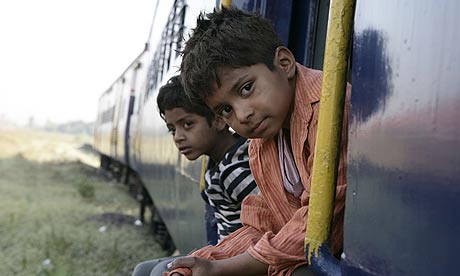
It is one resolution worth doing for 2009.
Go and see Slumdog Millionaire.
This movie, filmed in the reality of the emerging world that is Mumbai, India, is tough to watch, stunning and as good as all the hype surrounding it. I will not bore you with the details of the plot or the Bollywood / Hollywood analogies. There are far better sites for that. Let me just share with you my impressions. I have an indirect connection with the leading country of the subcontinent. It is perhaps the nation which is the birthplace of the majority of my non-USA friends. During an earlier assignment, I was responsible for establishing operations there to support products being imported to the United States. India presents a lens in which the whole of human struggle and aspiration can be viewed. It is a multicultural nation fraught with problems and promise. It has a population which is fiercely competitive and ingenious. It has the vestiges of British Imperial governance to shape its masala like population. It is deeply religious and secular at the same time. The nation also is awash in artistic talent and expression, perhaps only equaled by the United States.
I have a fascination with this nation of a billion or so people. It has sustained itself despite overwhelming odds against itself. It created the "green revolution" by which it fed itself when a whole continent to its West can not do so. What can we learn from India? Surely it is not the pop psychology of its most famous expats (Deepak Chopra and a host of gurus and swamis). It is not the tenets of Hinduism, which are fraught with as much contradiction as Christianity and violence as Islam. It is, I believe, their adaptability and embrace of change. At the end of the 19th century and for much of the 20th, India was an agrarian, balkanized society. British governance brought many of the states under unified control and laid the foundation for its infrastructure. But it was the dawn of the technological age which propelled the nation into preeminence.
One of it's distinct advantages was a strong civil service and a cadre of fluent English speakers. Despite the vast cultural differences between the west and India, their population was able to leverage this gift of communication into viable business opportunities. Couple this with an increasingly capable education system and India's best resource, its people, stormed onto the world stage with a vengeance. The Indian diaspora has also made a positive impact on the globe. They have adopted the necessary cultural aspects of their new nations and retained the core beliefs of their native one. As such, Indian communities are strong, vibrant and generally lacking the negative aspects of many other nations expatriates.
In this spirit I saw the film. I was eager to get another look at the Indian self image. I was not disappointed. What transpired for the young protagonist, Jamal Malik, is a lesson for all of India. The fact that his religion and that of his love interest appeared to be polar opposites only underscored the hopefulness of the movie.
Resolve to see this film.
04 March 2007
We are all Spartans...

The newest blood and glory movie ( a remake) is coming to town. It is the 300 and is a stylized version of the battle of Thermopalye. The Spartans stood against a horde of Persians under Xerxes. The Spartans were led by Leonidas Leonidas, and a core group of 300 soldiers (and several thousand allies). Leonidas was told he was doomed and indeed fell in battle. The Persians were defeated and Sparta was saved.
A recent posting on Drudge Report has reporters making analogies between Bush and the two leaders in the movies. Considering this is an ancient story and a remake at that. The question seems secondary.
However, I do have an opinion. Bush is Leonidas and we are Sparta. I really don't know who Xerxes is in the modern context, perhaps simply a representation of the backward nature of some of our opponents.
Let me offer a few comparisons;
1) Bush (although not falling in battle) , will suffer a similar political fate for a time. That is until history returns to judge our actions.
2) The Spartans sent an all volunteer force to deal with an unpopular, but critical, conflict.
3) Leonidas is played by Gerard Butler (initials G.B.) - okay, that's a stretch.
I strongly believe that this conflict will define the course of the world for the next century. I think it will be made moot by creeping technology. For example, Honda is launching a hydrogen car in 2008 in California. America has arisen, not with a bloody vengance, but with an eye to its security through energy and independence.
Once again the flailings of the trailing edge of the planet will be disregarded. Hopefully, these societies will embrace true equality and reexamine some of their extreme social practices. Until then, count me among the 300.
Subscribe to:
Posts (Atom)